
%201.jpg)
There are two different types of bookings: direct and indirect. Which one is right for your business?
The answer is different for every business. Your business niche and size are just a few of the factors to consider. In this post, you’ll learn which type is best suited for your industry. We’ll also show you the pros and cons of direct and indirect booking.
Let’s get started.
Direct vs. Indirect Booking
Here’s a quick breakdown of the differences between direct and indirect bookings.
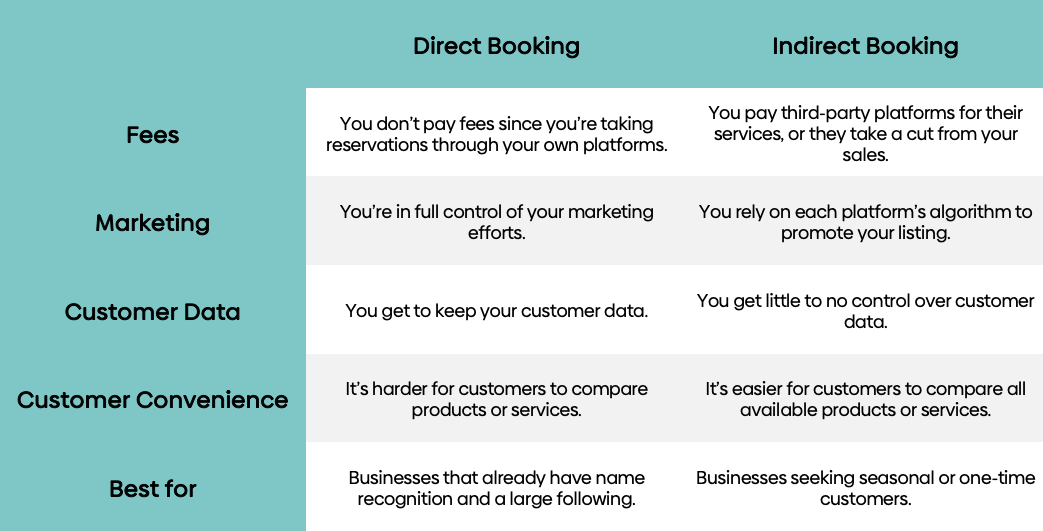
Now let’s dive into what each type of booking has to offer. These should help you decide what booking method to implement for your business.
Direct Bookings
Direct bookings occur when customers make reservations directly through your platforms. So if a customer books an appointment through your website or by calling your office, that’s considered a direct booking.
The great thing about direct bookings is that you won’t need to pay third-party fees. And you get to keep valuable customer data, such as names and email addresses. You can also control how you communicate with customers.
However, you’ll have to find and retain leads yourself, which can be difficult for new businesses. To succeed, you’ll need to invest in marketing, enhance your search visibility, and foster customer engagement.
Direct bookings are best for businesses that already have a strong brand presence and loyal customers.
Indirect Bookings
Customers make indirect bookings when they use third-party platforms (like online travel agencies, agents, and affiliates) to make reservations. If you’ve ever used Airbnb to reserve a house for a vacation, you’ve made an indirect booking.
Businesses use third-party platforms because they come with built-in audiences that provide global exposure. For customers, these platforms make it easier to compare services and find the best deals.
Indirect bookings can be costly, though. Third-party platforms charge fees or take a cut of each booking. You’ll also have to contend with each platform’s algorithm, which may require spending on ads to appear consistently in search results.
However, if you want a wider reach, we suggest using indirect bookings to put your small business in front of relevant audiences with minimal effort. It’s also beneficial for those seeking seasonal or one-time customers.
Types of Bookings Across Various Sectors
When thinking about which type of booking to use, consider the industry you’re in. For example, indirect booking might be more effective for those in the travel industry. Let’s review the most popular booking types by industry.
Travel Bookings
Travel bookings refer to reservations made for services within the tourism industry. These include car rentals, hotel stays, flights, and tours. Customers can book directly through a business’s official website or use third-party services such as Expedia or Trip.com.
Online travel agencies (OTAs) play a huge role in flight, hotel, and tour bookings. Their platforms make it easier for users to compare amenities and pricing between competing service providers. Additionally, OTAs often feature mobile-friendly websites or apps that facilitate last-minute bookings for travelers.
Event Bookings
Event bookings cover reservations or ticket purchases for concerts, conferences, festivals, and similar occasions. You can book tickets from an event’s website or directly from the venue.
However, you can also buy tickets and explore upcoming shows on platforms like Ticketmaster. They also have modern features like mobile tickets and instant confirmations, which simplify check-ins at venues. Plus, they handle all the backend infrastructure. This means you don’t have to worry about your site crashing or other similar scenarios.
If you’re organizing an event, you’ll want to use an online booking system rather than selling tickets in person or through phone reservations.
Appointment and Service Bookings
Appointment and service bookings cover all the reservations made for personal or professional services. These include medical consultations, fitness sessions, salon visits, and home repairs.
Users appreciate this feature because they can schedule these services at their preferred time. For businesses, it lets them manage availability efficiently.
People can still schedule appointments by phone or through walk-in scheduling. However, businesses now use booking and scheduling apps to enhance the booking experience. Popular apps in this space include Acuity Scheduling and Calendly.
Booking and scheduling apps automate the entire process, meaning less work for you. Using these apps reduces no-shows and improves customer engagement.
Restaurant Reservations
Restaurant operators value booking apps because they let diners secure tables in advance. Customers can book through the restaurant’s website or by phone.
However, reservation platforms like OpenTable make it far too convenient for users to ignore. Booking platforms let customers view all the restaurants in an area, their menus, and table availability.
Booking apps enable restaurants to accurately anticipate the number of guests they can expect, allowing them to order just the right amount of ingredients for the day. It also helps with staffing, as they know exactly how many are needed for service.
Key Considerations When Choosing a Booking Method
Several factors should be considered, including pricing, convenience, and reliability. Direct bookings offer more features and control. It’s also cheaper because you don’t have to pay fees. But setting it up could be an issue, especially for those who aren’t tech-savvy.
Using third-party platforms can increase your reach, but it will also reduce your profit margins. And if the platform’s algorithm doesn’t work in your favor, you might see less foot traffic.
So what do you do? You’ll need to determine what works for your niche. If you’re a hotel, adding your business to a travel booking site makes the most sense. Your target audience is already there, so you may as well join the party. For a small-town salon, direct booking might be all you need.
When in doubt, you could try both. Offer direct and indirect channels to maximize your reach and maintain customer relationships.
Emerging Trends in Bookings
Aside from mobile-first booking systems, there’s also been a rise in AI-powered reservation platforms. Google Travel and Hopper, for example, use AI to suggest personalized options and predict price changes.
AI and automation lead to reduced manual scheduling, faster customer support, and enhanced data insights.
Common Problems with Booking and How to Avoid Them
Overbookings, manual entry errors, miscommunication, and payment processing issues are just a few of the problems that businesses encounter when processing bookings.
You can, however, resolve these issues by using booking management software. They’re not just good for automating tasks, but also synchronize reservations in real-time.
Some online booking apps even integrate multiple channels for seamless transactions. For example, when customers book reservations through your website, you could trigger an email thanking them for their purchase.
Key Takeaways
- Direct bookings give you full control over your customer data and branding. Indirect bookings expand your reach through third-party platforms.
- Every industry has a booking method that fits best. While travel brands thrive on third-party sites, local services could find more success with direct bookings.
- Pick a booking method that matches your audience’s habits. You can expand your channels as your business grows.
Frequently Asked Questions
Is it Cheaper to Book Online or Offline?
Booking online is usually cheaper than booking offline because it removes agent or service fees. Online platforms allow direct reservations through official websites or apps, lowering costs. For instance, hotels and airlines often offer lower prices online compared to travel agencies that add commissions or processing fees.
Are Booking Platforms Safe to Use for Financial Transactions?
Yes, booking platforms are safe for financial transactions when they use secure payment gateways, SSL encryption, and comply with PCI DSS standards. They protect user data through encryption and verified processors that prevent unauthorized access during online payments.
What is Desk Booking?
Desk booking is a system that enables employees to reserve desks or workspaces, rather than having fixed seating assignments. It supports hybrid and flexible workplaces by improving space efficiency. The main types include hot desking, where desks are used on a first-come basis, and hotel-style booking, where desks are reserved in advance.
Table of contents
There are two different types of bookings: direct and indirect. Which one is right for your business?
The answer is different for every business. Your business niche and size are just a few of the factors to consider. In this post, you’ll learn which type is best suited for your industry. We’ll also show you the pros and cons of direct and indirect booking.
Let’s get started.
Direct vs. Indirect Booking
Here’s a quick breakdown of the differences between direct and indirect bookings.
Now let’s dive into what each type of booking has to offer. These should help you decide what booking method to implement for your business.
Direct Bookings
Direct bookings occur when customers make reservations directly through your platforms. So if a customer books an appointment through your website or by calling your office, that’s considered a direct booking.
The great thing about direct bookings is that you won’t need to pay third-party fees. And you get to keep valuable customer data, such as names and email addresses. You can also control how you communicate with customers.
However, you’ll have to find and retain leads yourself, which can be difficult for new businesses. To succeed, you’ll need to invest in marketing, enhance your search visibility, and foster customer engagement.
Direct bookings are best for businesses that already have a strong brand presence and loyal customers.
Indirect Bookings
Customers make indirect bookings when they use third-party platforms (like online travel agencies, agents, and affiliates) to make reservations. If you’ve ever used Airbnb to reserve a house for a vacation, you’ve made an indirect booking.
Businesses use third-party platforms because they come with built-in audiences that provide global exposure. For customers, these platforms make it easier to compare services and find the best deals.
Indirect bookings can be costly, though. Third-party platforms charge fees or take a cut of each booking. You’ll also have to contend with each platform’s algorithm, which may require spending on ads to appear consistently in search results.
However, if you want a wider reach, we suggest using indirect bookings to put your small business in front of relevant audiences with minimal effort. It’s also beneficial for those seeking seasonal or one-time customers.
Types of Bookings Across Various Sectors
When thinking about which type of booking to use, consider the industry you’re in. For example, indirect booking might be more effective for those in the travel industry. Let’s review the most popular booking types by industry.
Travel Bookings
Travel bookings refer to reservations made for services within the tourism industry. These include car rentals, hotel stays, flights, and tours. Customers can book directly through a business’s official website or use third-party services such as Expedia or Trip.com.
Online travel agencies (OTAs) play a huge role in flight, hotel, and tour bookings. Their platforms make it easier for users to compare amenities and pricing between competing service providers. Additionally, OTAs often feature mobile-friendly websites or apps that facilitate last-minute bookings for travelers.
Event Bookings
Event bookings cover reservations or ticket purchases for concerts, conferences, festivals, and similar occasions. You can book tickets from an event’s website or directly from the venue.
However, you can also buy tickets and explore upcoming shows on platforms like Ticketmaster. They also have modern features like mobile tickets and instant confirmations, which simplify check-ins at venues. Plus, they handle all the backend infrastructure. This means you don’t have to worry about your site crashing or other similar scenarios.
If you’re organizing an event, you’ll want to use an online booking system rather than selling tickets in person or through phone reservations.
Appointment and Service Bookings
Appointment and service bookings cover all the reservations made for personal or professional services. These include medical consultations, fitness sessions, salon visits, and home repairs.
Users appreciate this feature because they can schedule these services at their preferred time. For businesses, it lets them manage availability efficiently.
People can still schedule appointments by phone or through walk-in scheduling. However, businesses now use booking and scheduling apps to enhance the booking experience. Popular apps in this space include Acuity Scheduling and Calendly.
Booking and scheduling apps automate the entire process, meaning less work for you. Using these apps reduces no-shows and improves customer engagement.
Restaurant Reservations
Restaurant operators value booking apps because they let diners secure tables in advance. Customers can book through the restaurant’s website or by phone.
However, reservation platforms like OpenTable make it far too convenient for users to ignore. Booking platforms let customers view all the restaurants in an area, their menus, and table availability.
Booking apps enable restaurants to accurately anticipate the number of guests they can expect, allowing them to order just the right amount of ingredients for the day. It also helps with staffing, as they know exactly how many are needed for service.
Key Considerations When Choosing a Booking Method
Several factors should be considered, including pricing, convenience, and reliability. Direct bookings offer more features and control. It’s also cheaper because you don’t have to pay fees. But setting it up could be an issue, especially for those who aren’t tech-savvy.
Using third-party platforms can increase your reach, but it will also reduce your profit margins. And if the platform’s algorithm doesn’t work in your favor, you might see less foot traffic.
So what do you do? You’ll need to determine what works for your niche. If you’re a hotel, adding your business to a travel booking site makes the most sense. Your target audience is already there, so you may as well join the party. For a small-town salon, direct booking might be all you need.
When in doubt, you could try both. Offer direct and indirect channels to maximize your reach and maintain customer relationships.
Emerging Trends in Bookings
Aside from mobile-first booking systems, there’s also been a rise in AI-powered reservation platforms. Google Travel and Hopper, for example, use AI to suggest personalized options and predict price changes.
AI and automation lead to reduced manual scheduling, faster customer support, and enhanced data insights.
Common Problems with Booking and How to Avoid Them
Overbookings, manual entry errors, miscommunication, and payment processing issues are just a few of the problems that businesses encounter when processing bookings.
You can, however, resolve these issues by using booking management software. They’re not just good for automating tasks, but also synchronize reservations in real-time.
Some online booking apps even integrate multiple channels for seamless transactions. For example, when customers book reservations through your website, you could trigger an email thanking them for their purchase.
Key Takeaways
- Direct bookings give you full control over your customer data and branding. Indirect bookings expand your reach through third-party platforms.
- Every industry has a booking method that fits best. While travel brands thrive on third-party sites, local services could find more success with direct bookings.
- Pick a booking method that matches your audience’s habits. You can expand your channels as your business grows.
Frequently Asked Questions
Is it Cheaper to Book Online or Offline?
Booking online is usually cheaper than booking offline because it removes agent or service fees. Online platforms allow direct reservations through official websites or apps, lowering costs. For instance, hotels and airlines often offer lower prices online compared to travel agencies that add commissions or processing fees.
Are Booking Platforms Safe to Use for Financial Transactions?
Yes, booking platforms are safe for financial transactions when they use secure payment gateways, SSL encryption, and comply with PCI DSS standards. They protect user data through encryption and verified processors that prevent unauthorized access during online payments.
What is Desk Booking?
Desk booking is a system that enables employees to reserve desks or workspaces, rather than having fixed seating assignments. It supports hybrid and flexible workplaces by improving space efficiency. The main types include hot desking, where desks are used on a first-come basis, and hotel-style booking, where desks are reserved in advance.
Recommended Posts