


11+ Museum Fundraising Ideas to Try Right Now!
In tough economic times like these, planning for museum fundraising events can feel discouraging. With shrinking budgets and increased competition for grants and donations, it can feel like the smartest move is to wait for more favorable conditions.
But museums don’t thrive by waiting. Sure, standing out has never been more difficult. But that doesn’t mean you need a massive budget. Perhaps, just smarter and more creative strategies.
From hosting themed events and launching crowdfunding campaigns to selling merchandise and partnering with local businesses, there are plenty of creative ways to raise money without breaking the bank.
Stick around because we’re sharing over 11 actionable fundraising ideas for small museums that can bring in support this 2025.
Identify Your Museum Fundraising Goals First
Let’s say you manage a local historical society museum that focuses on civil rights history from the late 1960s to the early 1970s. Recently, you’ve seen striking parallels between past and present, and you want to document today’s movement by collecting oral histories and artifacts from modern-day community leaders.
To do that, you need funding for recording equipment and a consulting oral historian to guide the project professionally.
That’s a powerful, clear objective, and it’s the kind of focus that separates successful museum fundraising campaigns from those that fizzle out.
When you define your fundraising goal early, everything else starts to click into place. Your messaging gets sharper. Your team stays aligned. Donors understand exactly what their contributions will achieve.
Whether you're raising $15,000 to restore a local landmark model, funding a traveling education program, or renovating outdated exhibit space, clarity gives your campaign the traction it needs.
General appeals might bring in a few dollars. But purpose-driven ones bring in lasting support.
If you're in the early stages of developing a museum, our comprehensive guide on how to start a museum offers crucial advice and steps to lay a strong foundation and attract initial funding.
Top Museum Fundraising Ideas You Should Try in 2025
Innovative fundraising ideas can help attract more donors, increase engagement, and support your museum’s programs and initiatives.
Whether you’re planning art museum fundraising events or launching online donation drives, these strategies will help you achieve your fundraising goals.
Raise Funds Through Email Marketing Campaigns
Email marketing is a powerful tool for reaching out to your audience. By crafting compelling messages and highlighting your museum's needs and achievements, you can encourage donations.
Regular updates and clear calls to action can significantly boost your fundraising efforts.
Use Social Media for Fundraising
Social media platforms offer an excellent opportunity to connect with a broader audience. Use these platforms to share stories, promote fundraising campaigns, and engage with followers.
Interactive posts, live events, and sharing behind-the-scenes content can make your fundraising more relatable and effective. You can also collaborate with local businesses for joint events, amplifying your reach and community involvement.
To maximize the impact of your social media efforts, it's essential to have a comprehensive strategy in place. Our detailed museum marketing guide provides valuable insights and tips on how to effectively use social media to attract more visitors and increase donations.
Join Popular Crowdfunding Platforms
Crowdfunding platforms like Kickstarter and GoFundMe can help you reach a larger audience and gather small donations from many contributors.
This is especially effective when you use crowdfunding to support specific projects. These platforms are ideal for specific projects or initiatives, allowing you to set clear goals and deadlines for your fundraising efforts.
Apply for Grants from Local Trusts and Foundations
Grants from local trusts and foundations can provide substantial funding for museums. This often includes grant writing for cultural initiatives that align with your mission. Be sure to customize each application to meet the specific criteria of the grant provider.
Offer Patron Programs
Patron programs can create a dedicated support base for your museum. By offering exclusive benefits such as special events, behind-the-scenes tours, and recognition in museum publications, you can attract high-level donors.
These programs build donor loyalty through membership programs and encourage monthly giving for sustained support, especially when designed with tiered incentives.
Arrange Virtual and In-Person Events
Events are a great way to engage your community and raise funds. Whether virtual or in-person, events like galas, workshops, and lecture series can draw in donations and raise awareness about your museum's needs.
In fact, many museums host annual galas to secure high-value donations, while also generating community support through special events.
Offer Unique Museum Tours and Workshops
Providing unique tours and workshops can attract visitors and generate additional revenue. Specialty tours, educational workshops, and themed events can appeal to different audience segments and encourage repeat visits.
Creating unique experiences is key to drawing visitors. For art-focused strategies, see our marketing tips for art galleries. These tips can enhance your museum's appeal and engage your audience.
Organize Charity Auctions
Charity auctions can be both fun and profitable. Gather unique items or experiences to auction off, either online or at a live event. This tactic utilizes silent auctions to boost revenue while also attracting new supporters who enjoy experiential giving opportunities.
Create Tiered Membership Programs
Membership programs with tiered levels offer varying benefits based on donation amounts. This structure can encourage donors to give more to receive additional perks, such as exclusive access to exhibits, free admission, and special discounts.
Use Museum Shops and Special Merchandise
Museum shops and exclusive merchandise can be significant revenue sources. Offer unique, high-quality items that reflect your museum's themes and collections. Promote these items through your website, social media, and during events.
Encourage Peer-to-Peer Fundraising
Peer-to-peer fundraising leverages your supporters' networks to raise funds. Encourage volunteers and patrons to create their fundraising campaigns, share their stories, and solicit donations from their friends and family.
Utilize Online Donation Platforms
Consider using some of the best fundraising systems for museums to streamline the donation process. Ensure your website has a user-friendly donation page, and consider partnering with platforms like PayPal, Stripe, or dedicated donation software to manage contributions efficiently.
How to Plan Your Fundraising Strategy
Creating a solid fundraising strategy is key to achieving your museum’s financial goals. By planning ahead, you can make the most of your resources and efforts.
This will guide you through the essential steps to develop an effective fundraising plan, ensuring your museum's success and sustainability.
- Set Clear Goals and Objectives: Define what you want to achieve with your fundraising for museums. Clear goals help you measure success and stay focused.
- Allocate Your Budget: Determine how much you can spend on fundraising activities. A well-planned budget ensures you use your resources effectively.
- Analyze Competitors: Look at what other museums are doing to raise funds. Learn from their successes and challenges to refine your strategy.
Tips to Make Your Museum Stand Out for Fundraising
What sets museums apart is their ability to create immersive, memorable experiences that connect people to history, art, and culture.
Think about themed donor events, after-hours guided tours, and naming opportunities for benefactors. Some museums even offer “curator-for-a-day” experiences or behind-the-scenes sneak peeks into rarely seen collections.
Consider strategies that invite philanthropists to private previews or involve board members in fundraising strategy to add value and credibility. When your approach is personal and distinctive, your donors feel like part of the mission.
A notable example is the Museum of East Anglian Life, which launched an “Adopt a Piggy Bank” campaign to mark its 50th anniversary. The campaign was inspired by a local heritage breed, the Large Black Pig.
Visitors could take home a custom piggy bank for a small refundable deposit and were encouraged to fill it with donations before returning it to support the museum’s Heritage Farm. This simple, low-cost initiative tapped into local culture, created emotional engagement, and helped boost contributions significantly.
Key Takeaways
- Diversify Fundraising Methods: Use a mix of online and offline strategies to reach a broader audience.
- Engage Your Community: Build strong relationships with your community through events, social media, and personalized outreach.
- Leverage Technology: Utilize digital tools and platforms to streamline fundraising and reach more potential donors.
Frequently Asked Questions
What is the Most Profitable Fundraising Event?
The most profitable fundraising event often depends on your audience and resources. However, charity auctions and gala events tend to attract high-value donations due to their exclusive nature and the opportunity for donors to bid on unique items or experiences.
How Important are Grants for Museum Funding?
Grants are crucial for museum funding as they provide substantial financial support for specific projects, operational costs, and expansions. Applying for grants can significantly supplement other fundraising efforts and ensure the sustainability of museum activities.
Should Museums Engage with Local Businesses for Fundraising?
Yes, engaging with local businesses can be highly beneficial. Partnerships with businesses can provide sponsorships, in-kind donations, and collaborative event opportunities. This enhances your fundraising efforts and helps build long-term local business support for the museum.
Is it Hard to Raise Funds for Museums?
Raising funds for museums can be challenging due to competition for donations, limited resources, and the need to continually engage and inspire potential donors.
However, with the right strategies and creative approaches, securing the necessary funding to support museum operations and projects is possible.

Multisensory Experiences: Definition and Meaning
Imagine walking into a room where the lights shift colors, soft music plays in the background, the air smells of fresh lavender, and textures invite your touch—suddenly, you're feeling it with all your senses.
Multisensory experiences in experience design refer to creating spaces or products that utilize more than one of our senses simultaneously, such as sight, sound, touch, taste, and smell. This helps people feel more involved, remember things better, and enjoy the experience more.
Since we understand the world through a mix of senses, using this approach makes experiences more powerful and engaging. This helps build richer and more memorable sensory experiences for users.
What is a Multisensory Experience?
A multisensory experience is a sophisticated interaction that engages multiple human senses simultaneously, aiming to create a more profound, immersive, and memorable experience.
This approach is grounded in the understanding that human perception is inherently multisensory; we constantly interpret and make sense of the world through the integration of visual, auditory, tactile, olfactory, and gustatory inputs.
- Vision (Sight): The perception of light, colors, shapes, and motion.
- Hearing (Auditory): The perception of sound, including tones, rhythms, and language.
- Touch (Tactile): The perception of physical contact, including texture, temperature, and pressure.
- Smell (Olfactory): The perception of scents and odors, which can evoke memories and emotions.
- Taste (Gustatory): The perception of flavors and substances on the tongue.
- Proprioception: The sense of body position and movement, contributing to how we perceive space and navigate environments.
- Vestibular Sense: The sense of balance and spatial orientation, important for movement and understanding our position relative to gravity.
Types of Multisensory Experiences
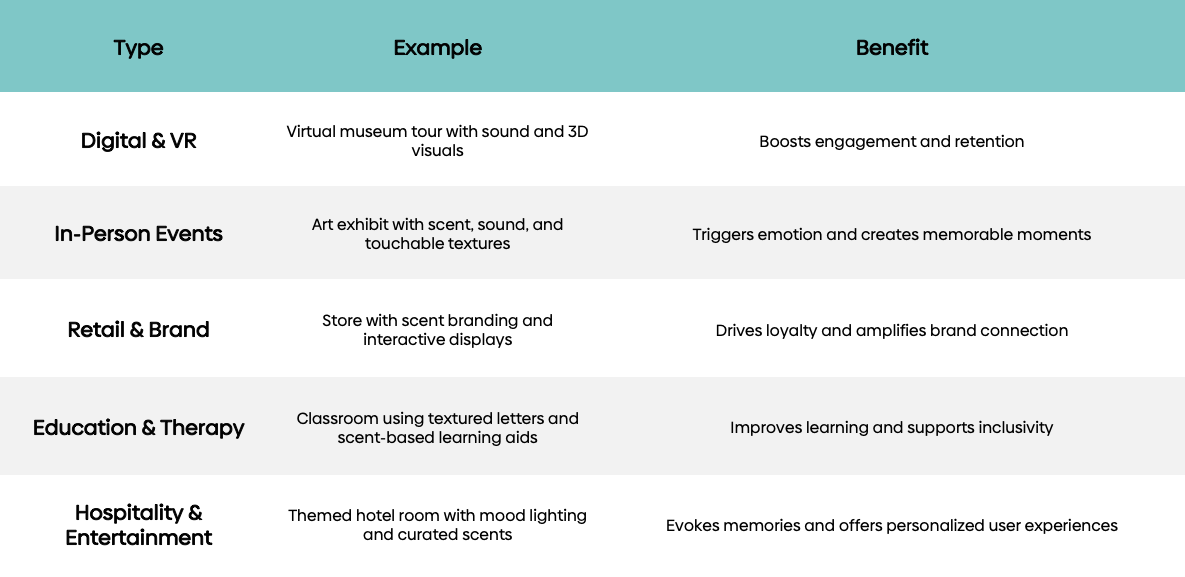
Top Examples of Multisensory Experiences
In the rapidly evolving landscape of design and technology, multisensory experiences have emerged as a powerful tool to captivate and engage audiences in unprecedented ways. From immersive art installations to interactive educational programs, the application of multisensory design principles is revolutionizing how we interact with our surroundings.
Below are some prominent examples that showcase the breadth and innovation of multisensory design in action.
Van Gogh Immersive Exhibitions
These exhibitions envelop visitors in the vibrant world of Vincent Van Gogh through large-scale projections, music, and sometimes scents, transforming his iconic paintings into a dynamic, encompassing environment.
Sensorial Restaurants
Places like Ultraviolet in Shanghai offer a dining experience where each course is accompanied by specific visuals, sounds, and scents, designed to enhance the flavor and overall dining experience.
Interactive Museums
The Museum of Ice Cream or the Color Factory invite visitors to engage all their senses through tactile exhibits, visually stunning rooms, edible treats, and scented installations, making for an unforgettable exploratory experience.
Educational VR Experiences
Virtual Reality (VR) platforms that simulate historical events or scientific phenomena, combining visual, auditory, and sometimes haptic feedback to create a deeply immersive learning environment.
Multi-sensory Art Exhibition
Multisensory elements have increasingly become a significant aspect of art exhibitions, offering a profound depth to the exploration of artistic expression and viewer engagement. By incorporating various sensory stimuli, artists and curators can transcend traditional visual boundaries, creating immersive environments that invite viewers to experience art in a holistic manner.
This approach not only enhances the aesthetic appeal of the artwork but also fosters a deeper emotional and cognitive connection with the audience.
How Do Multisensory Experiences Impact Learning?
Learning becomes a full-body experience as it engages multiple senses simultaneously, rather than just reading words on a page.
Instead of passively absorbing information, learners become active participants—seeing, hearing, touching, and sometimes even tasting or smelling concepts brought to life.
This sensorially balanced approach not only enhances user engagement and memory retention but also improves learning outcomes across diverse settings.
In fact, research shows that fifth-grade students who had a multisensory learning experience significantly improved their listening skills and comprehension. Students remembered themes, followed plots more easily, and expressed deeper emotional reactions to stories.
Multisensory learning stimulates sensory input in ways that trigger emotional responses and amplify sensory awareness: key factors in how our brains store and recall knowledge.
Take Maya, for example, a student who struggled with the concept of the water cycle. She didn’t understand the lesson until her teacher introduced a hands-on experiment.
Here, Maya was able to:
- Watch steam rise from a boiling pot (sight)
- Feel the warmth (touch)
- Hear the bubbling water (sound)
- Smell the change in the air (smell)
That simple, multisensory demonstration helped everything click.
Multisensory learning is applied in education, hospitality, and retail to create emotional and memorable connections. This memory-enhancing multimodal approach supports inclusivity in design by meeting diverse learning needs, including those of students with dyslexia, helping them evoke memories through sensory cues.
Important Factors in Creating a Multisensory Experience
Designing multisensory experiences is a complex, nuanced process that requires a deep understanding of how individuals perceive and interact with their environments. It involves more than just combining sights, sounds, and other sensory inputs; it's about creating a cohesive, immersive experience that engages users in a meaningful way.
Accessibility
Ensuring accessibility in multisensory experiences is crucial for creating inclusive environments where individuals with disabilities can equally participate and enjoy the full spectrum of the experience. Accessibility in this context goes beyond mere physical access to encompass the full engagement of all senses in a way that accommodates various disabilities.
Cultural Sensitivity
Cultural sensitivity in designing multisensory experiences is essential for creating environments that are respectful, inclusive, and engaging for people from diverse cultural backgrounds. This consideration ensures that the experiences do not inadvertently perpetuate stereotypes, offend, or exclude individuals based on cultural differences.
By acknowledging and integrating the vast array of cultural norms, values, and preferences, designers can craft experiences that resonate on a global scale, fostering a sense of belonging and appreciation among all participants.
Cost and Complexity
The creation of multisensory experiences poses significant challenges in terms of cost and complexity, particularly as designers strive to craft environments that engage multiple senses in a cohesive and impactful way.
The integration of various sensory elements—ranging from advanced technological installations to meticulously curated scents and tastes—requires not only a diverse skill set among the design team but also a substantial investment in materials, technology, and content development.
Technological Constraints
Technological limitations can significantly impact the creation and execution of multisensory experiences, potentially restricting the scope of sensory engagement or the overall quality of the experience.
From the availability of cutting-edge equipment to the integration of various technologies, designers often face hurdles in realizing their vision for a truly immersive environment. These constraints can stem from budgetary limits, the current state of technology, or compatibility issues between different systems and platforms.
Sustainability
Sustainability has become an increasingly crucial consideration in multisensory experience design, reflecting a broader societal shift towards environmental responsibility and ethical practices.
The integration of multiple sensory elements—ranging from digital displays to physical installations—often requires substantial resources, including energy consumption, materials, and waste production. As such, designers and creators are challenged to balance the immersive and engaging qualities of these experiences with the imperative to minimize their environmental footprint.
Ethical Considerations
The design of multisensory experiences involves a range of ethical considerations that extend beyond mere compliance with laws and regulations.
These considerations are rooted in the responsibility to respect the dignity, rights, and well-being of all participants, ensuring that experiences are not only accessible and inclusive but also mindful of privacy, consent, and cultural sensitivity.
Key Takeaways
- Multisensory Integration Enhances Engagement: Engaging multiple senses simultaneously in experience design significantly enhances user engagement, memory retention, and overall satisfaction, leveraging the integrated nature of human perception.
- Diverse Applications and Innovations: Multisensory experiences have been innovatively applied across various fields, including immersive art exhibitions, sensorial restaurants, interactive museums, and educational VR experiences, showcasing the breadth and potential of multisensory design.
- Complex Design Considerations: Creating multisensory experiences requires careful consideration of accessibility, cultural sensitivity, cost, technological constraints, sustainability, and ethical practices, underscoring the complexity and nuanced nature of the design process.
- Commitment to Inclusivity and Sustainability: Ensuring accessibility for individuals with disabilities and adopting sustainable practices are crucial for creating inclusive and environmentally responsible multisensory environments, reflecting a commitment to broader societal values.
Frequently Asked Questions
Is a Multisensory Experience More Effective Than Single-Sensory Design?
Yes. Multisensory experiences are more effective than single-sensory designs because they engage multiple senses, increasing memory retention, emotional impact, and user engagement. In contrast, single-sensory designs often lack depth, resulting in lower attention and less immersive interaction.
Is it Possible to Create a Multisensory Experience Online?
Yes. You can create a multisensory experience online using tools like virtual reality websites, interactive audio-visual content, and gamified learning platforms. These formats stimulate sight, sound, and touch (via haptic feedback), enhancing engagement and learning outcomes in digital environments.
Is There a Risk of Sensory Overload In Multisensory Experiences?
Yes. Sensory overload can occur when too many intense stimuli, such as loud sounds, flashing visuals, and crowded layouts, are combined. This overwhelms the brain, reduces comprehension, and can lead to discomfort or disengagement, especially in poorly designed environments.

Peek's Google Tag Manager Integration
Every day, your marketing efforts direct thousands of guests to your website. Yet, without precise tracking, it’s challenging to clearly understand how your advertising spend translates into revenue.
Peek’s new integration with Google Tag Manager (GTM) simplifies the process of tracking conversions, optimizing sales funnels, and managing marketing tags across multiple campaigns and customer experiences—all without needing developer support.
.gif)
Why Use Peek’s Google Tag Manager Integration?
With Peek’s GTM integration, you can:
- Know Which Campaigns Drive Bookings: Clearly attribute bookings and revenue to specific marketing efforts.
- Identify Checkout Flow Drop-offs: Pinpoint exactly where customers abandon their bookings, enabling targeted improvements.
- Launch Pixels, Scripts, and Tests Faster: Quickly deploy new tracking and testing tools without technical delays.
Connecting your booking flow to leading marketing and CRM tools, such as Google Analytics, Facebook, and TikTok, is now just a few clicks away. Watch the video below to discover how Peek's GTM integration provides effortless insights into your bookings, helping you better understand your business and enhance your marketing strategy.

Getting Started: Step-by-Step Guide
Easily set up Peek’s GTM integration in minutes and start gaining valuable insights into your bookings by following these simple steps:
- Log In or Create a GTM Account: Visit tagmanager.google.com and access your Google Tag Manager dashboard.
- Copy Your Container ID: Find your GTM Container ID (beginning with "GTM-") located at the top-right of your dashboard.
- Integrate with Peek Pro: Go to the Analytics section in Peek Pro and paste your GTM Container ID into the designated field.
- Publish Your Workspace: Activate your GTM workspace to start tracking events directly from Peek Pro.
- Test Your Tags: Use GTM’s built-in preview mode or your analytics platform to ensure everything is tracking correctly.
For an in-depth walkthrough, visit our Helpdesk or reach out through our Helpdesk Chat.
Enhance Your Marketing Strategy Today
No more guesswork—Peek’s Google Tag Manager integration helps you confidently understand what drives your bookings. Start optimizing your marketing strategies immediately and see the impact in your revenue. If you want to explore the new GTM integration and more, schedule a demo with the Peek Pro team today.

7 Pricing Methods to Attract Tourists and Maximize Bookings
Setting the right pricing strategy in tourism isn’t just about picking a number and hoping it sticks. It’s about understanding what pricing methods attract tourists, aligning with market conditions, and optimizing your offerings to drive consistent bookings.
The right pricing methods impact your ability to increase your profit margin. With competition growing across top destinations, knowing how to strategically set, adjust, and promote your prices can be the difference between thriving and simply staying afloat.
In this article, we’ll explore several pricing methods you can implement to maximize bookings and increase overall profitability.
1. Dynamic Pricing
Dynamic pricing allows you to automatically adjust rates in real time based on factors like demand, seasonal fluctuations, and competitor pricing strategies. It’s a responsive model that works especially well in the tourism industry, where market conditions shift frequently.
One example is Hilton Honors, Hilton’s loyalty rewards program. Waldorf Astoria Los Cabos Pedregal previously required 120,000 Hilton Honors points per night. As of late 2024, that same stay can cost up to 140,000 points during peak seasons.
This shift reflects Hilton’s move toward dynamic award pricing, where point costs rise or fall depending on demand, just like cash prices.
So, instead of a flat rate in points, Hilton now adjusts redemption rates based on factors like seasonality or event-driven demand. Such a dynamic peak season pricing strategy allows Hilton to align rewards with real-time market value.
2. Value-Based Pricing
With value-based pricing, the focus isn’t on how much your service costs to deliver, but how much value your customers perceive. This method is ideal for premium, high-end, or specialized experiences where tourists are willing to pay more for unique benefits.
For example, Aman Resorts’ pricing is not determined by operational costs but by the unique value perceived by their clientele. They use value-based pricing by emphasizing personalized service, ultra-secluded locations, and an atmosphere of tranquility and exclusivity.
Aman also maintains a limited number of properties worldwide, each offering a distinctive and secluded environment that enhances the sense of scarcity and justifies higher rates.
This approach works best when you clearly communicate the value upfront, thereby completely avoiding the need to negotiate prices with your customers.
3. Package Pricing and Bundling
Package pricing and bundling offer travelers a sense of convenience and savings. Instead of selecting individual services, they can choose a curated package that combines popular products, often at a discount.
For example, you might offer a package that includes a city tour, lunch, and skip-the-line museum access, creating a more appealing deal than buying each separately.
This approach is especially effective for family vacations or group bookings, where simplicity and cost-efficiency matter. This not only attracts group bookings, but it also appeals to budget-conscious tourists.
4. Loyalty and Membership Pricing
Businesses that support loyalty rewards help retain existing customers through a reward system that provides exclusive offers, discounts, or access to limited experiences.
Examples include hotel loyalty programs and frequent flyer schemes, both of which drive retention and increase profitability over time. Returning to Hilton Honors, points can be redeemed for complimentary nights, upgrades, and exclusive experiences, which encourages repeat business and fosters long-term customer relationships.
For tour operators, a loyalty discount on a second purchase or early access to seasonal promotions can provide similar results.
5. Social Media and Influencer Pricing
Consumers are influenced by peer reviews and social proof. When influencers or past guests promote your services, they help increase visibility and build trust.
Social media and influencer pricing involve offering time-sensitive promotions, follower-only discounts, or influencer-curated packages that create buzz and drive engagement. You can let an influencer share a unique deal via Instagram or offer limited packages through Facebook to attract a broader target market, including their fans.
For instance, the Wilson County Convention & Visitors Bureau partnered with influencer Sarah Gray for Instagram and TikTok videos, such as “Choose Your Own Adventure” date night. This drove over 675,000 impressions and 34,000 engagements. This just shows how influencer-led promotions can effectively attract and convert new travelers.
6. Early Bird and Last-Minute Deals
These two time-sensitive methods work exceptionally well to keep your booking calendar full. Early bird deals reward travelers who plan ahead with affordable, budget-friendly rates. On the other hand, last-minute deals attract spontaneous travelers seeking quick experiences.
Platforms like Expedia, Agoda, and other booking platforms offer a variety of early-bird and last-minute vacation packages, including flights, accommodations, and activities, often at discounted rates. These offers create urgency and encourage early bookings, helping you fill your schedule and maintain high occupancy year-round.
7. Psychological Pricing
Psychological pricing is based on the idea that how a price feels matters just as much as the number itself. Techniques you can implement include:
- Charm pricing (e.g., $99.99 instead of $100)
- “Limited-time” deals
- Tiered pricing
This method plays on human behavior and purchasing patterns. When travelers see added value, they feel more inclined to act.
How to Choose the Right Pricing Strategy for Tourism
The right pricing strategy should be aligned with your business goals, your target market, and the realities of the competitive landscape, especially if you operate in highly visited cities in the US.
Here are things to consider when building a strategy that’s both profitable and sustainable:
- Understand Your Costs and Value: Evaluate your operating costs and consider how your services provide value to your clients, so you meet customer expectations without sacrificing profit margin.
- Analyze Your Target Market and Competition: Research your target market and monitor your competition to help you position your offerings, create relevant products, and offer competitive rates to target specific tourist segments.
- Select and Implement a Strategic Approach: Choose a pricing method that aligns with your goals: reaching budget-conscious tourists, promoting premium packages, or increasing revenue.
- Monitor, Evaluate, and Adapt Continuously: Be responsive to changes in demand, competitor activity, and market fluctuations. Use tools to track performance metrics, adjust rates, and allow flexibility in payments, offers, and packages.
Remember, this is an ongoing process that requires research, flexibility, and the right tools. As market conditions evolve and traveler expectations shift, you should always be ready to adapt to the continuing changes of the travel industry.
Challenges and Considerations when Pricing Tours
Many businesses struggle to strike the right balance between staying competitive, meeting guest expectations, and protecting their profit margins. Fortunately, these challenges can be managed with careful planning and a proactive approach.
Here’s how to build a strategy that is flexible, sustainable, and clearly communicates the value you provide:
- Managing Price Sensitivity: Build in flexibility and offers that appeal to budget-conscious tourists without undervaluing your product or eroding profitability.
- Balancing Profitability and Customer Satisfaction: Ensure your pricing aligns with guest expectations while maintaining strong margins to protect your business’s bottom line.
- Responding to Dynamic Competition: Stay agile in a changing market by adapting quickly to competitors’ moves using dynamic pricing tools and strategies.
- Communicating the Value of Quality Inclusions: Clearly explain added benefits in your packages so travelers understand the value you provide and feel confident in your prices, which also ensures transparency in pricing.
Clearly addressing these challenges positions your business to grow with confidence, no matter how the market shifts. So, price smart, compete hard, and let your strategy speak for your brand.
Key Takeaways
- Pricing methods that attract tourists are the ones that offer a strategic mix of value, timing, and adaptability.
- Dynamic pricing, loyalty rewards, and bundled value-added packages are proven ways to maximize bookings.
- Successful pricing requires continuous market monitoring and flexible strategy adaptation.
Frequently Asked Questions
Is It Possible to Combine Different Pricing Methods to Attract More Tourists?
Yes, combining different pricing methods, such as seasonal pricing, dynamic pricing, and bundle deals, can attract more tourists by appealing to diverse needs and increasing perceived value.
How Has the Rise of Online Travel Agencies (OTAs) and Comparison Websites Impacted Tourist Pricing Expectations?
Online travel agencies and comparison websites have increased tourist expectations by making competitive pricing more visible, encouraging travelers to expect better deals and transparent pricing structures.
What Pricing Considerations are Important for Attracting Solo Travelers?
Attract solo travelers by offering exclusive deals for individuals, flexible booking options, and personalized experiences that cater to independent travel styles.

How to Analyze Booking System Analytics Effectively
Ever feel like you're flying blind when it comes to your business data? You’ve got bookings rolling in, guests coming and going, and reviews trickling in. But when it comes to what’s actually working (or not), things get fuzzy.
Knowing how to analyze booking system analytics effectively can be the difference between a thriving tour business and one that’s just scraping by. This type of analytics focuses on evaluating how your booking system performs. It examines everything from customer behavior and conversion rates to revenue, inventory management, and service quality.
So, how can you track, monitor, and visualize these numbers to enhance customer experience and revenue?
Let’s dig deeper into each concept.
Key Performance Indicators (KPIs) to Monitor in a Booking System
Your booking system is constantly collecting data, from guest preferences and behaviors to reviews and feedback. Analyzing the data properly allows you to gain powerful insights that drive smarter decisions for your tourism business, including airlines, hotels, tour operators, and rail & marine transportation, as highlighted in a study.
But first, you need to know what to look for.
Here are the performance indicators that matter most:

These KPIs are typically reported using your booking system’s analytics dashboard, making it easier to identify strengths, weaknesses, and areas for immediate action. When you regularly monitor these metrics, you’re better equipped to fine-tune your operations.
How to Segment Booking Analytics for Deeper Insights
If you want to stop guessing and start winning, you’ve got to segment. Why? Because lumping all your data insights together won’t tell you anything specific.
- Customer Segmentation: Break your audience down by age, location, or booking behavior to tailor promotions, offers, and marketing campaigns
- Time-based Analysis: Analyze booking trends over time (peak hours, seasonal spikes, and funnel drop-offs) to optimize staffing, improve the user journey, and build a strong seasonal pricing strategy
- Channel Performance: Track whether bookings are coming from your website, OTAs, or social media ads to compare traffic sources and referral traffic
Following these segmentation strategies enables you to gain clearer insights into customer behavior, uncover trends, and develop more effective marketing strategies.
Advanced Analytics Techniques
Because of technology, several methods can now help detect deeper patterns in your booking data, providing stronger forecasting power and guiding smarter decision-making for your tourism business.
To do so, pick the right online booking system for your tourism business, and then implement the following:
Predictive Analytics
Predictive analytics uses AI, machine learning, and historical data insights to forecast things like future demand, likely cancellation rates, and booking surges.
This technique enables businesses to monitor patterns and make proactive adjustments, such as staffing up ahead of busy weekends or revising pricing models to match occupancy trends. For example, a sudden drop in lead time is interpreted as a potential shift in customer behavior, perhaps due to seasonality, pricing, or even competitor promotions.
Predictive analytics allows you to act early and avoid costly surprises.
Cohort Analysis
Ever wonder how long your guests keep coming back? Cohort analysis groups customers based on when they made their first booking and tracks their behavior over time.
It is segmented by date or action and is reviewed for trends in retention. This helps you determine whether the awesome promo last June attracted one-time buyers or long-term fans, and how that compares to other offers.
A/B Testing
Not sure if a new headline, button color, or booking form layout is helping or hurting your conversion rate? A/B testing lets you test two variations of a change and compare them against each other to see which one performs better.
This technique is optimized through real user behavior, like funnel drop-off points, bounce rate, or time-to-purchase, to make your booking system smarter with every tweak.
How to Optimize System Performance and Pricing Models Through Analytics
The beauty of analytics is that you can use it to make everything run smoother and boost revenue. Here’s how to optimize your booking system analytics:
Monitor Peak Booking Times to Improve System Response
Use user flow and time on site data to identify your busiest booking hours, visualized via your analytics dashboard. This prepares your systems to handle traffic spikes, allowing you to improve load times, reduce downtime, and maintain a smooth customer experience during high-demand periods.
Adjust Pricing Models in Response to Demand Patterns
Use demand forecasting and adjust your pricing strategies to ride the waves. Offer last-minute deals during lulls and surge pricing during high demand.
Study Geographical Data to Localize Promotions and Campaigns
Geo-location data is analyzed to spot regional hotspots. If you got a traffic spike in Texas, run a promo just for that audience. You’ll see better results and save cash on broad marketing blasts.
Predict Seasonal Booking Trends to Allocate Resources Efficiently
Track historical booking patterns to know when to staff up or scale down. This reduces overhead and maximizes cost savings.
Track Customer Feedback Data
Use surveys, reviews, and feedback scores to spot recurring issues. This is assessed with quality improvement in mind and helps you offer better service that drives guest satisfaction.
Key Takeaways
- Booking system analytics helps you make smarter decisions and boost your bottom line.
- Segment your booking data and track key metrics like conversion rate, channel performance, and customer behavior.
- Use tools like to track, visualize, and act on your data in real time.
Frequently Asked Questions
How can I use segmentation in booking analytics?
Use segmentation in booking analytics by grouping customers based on behavior, preferences, or demographics. This improves marketing precision, personalizes offers, and increases conversion rates. It also enhances the customer experience by tailoring communication and services to the needs of each segment.
How does predictive analytics benefit my booking system?
Predictive analytics benefits your booking system by forecasting demand and cancellations. This allows businesses to optimize pricing, allocate staff efficiently, and reduce overbooking. Accurate predictions improve operational planning and increase customer satisfaction.
Why are KPIs important in booking analytics?
KPIs are crucial in booking analytics because they measure system performance, track key goals, and identify trends. This enables data-driven decisions that enhance efficiency and drive revenue growth. Monitoring KPIs helps identify what’s working and where improvements are needed.

Seasonal Pricing Strategy and Examples for Tour Operators
Are you a tour operator looking to maximize your profitability during peak seasons and maintain a steady stream of bookings during off-peak times?
A seasonal pricing strategy for tour operators might be what you need. When done right, this strategy can boost your revenue potential and help your business stay competitive in a fluctuating market.
Simply put, seasonal pricing is the practice of adjusting your prices based on changes in demand throughout the year. Here’s how you can develop a pricing strategy that will help you make the most out of each season, while keeping your guests happy and your business profitable.
Seasonal Trends in Tourism
The travel patterns of tourists vary significantly throughout the year, influenced by weather conditions, holidays, local events, and consumer behavior.
Here are terms to know:
- Peak Season: High demand period (e.g., summer, holidays) with pricing reflecting increased demand.
- Shoulder Season: Time before/after peak season with moderate demand; ideal for discounts and promotions.
- Off-Peak Season: Low demand period; use discounts or dynamic pricing to stay competitive and drive interest.
How to Integrate Technology for Dynamic Pricing
To stay ahead of the competition and adjust quickly to demand fluctuations, you can leverage technology, especially booking software. Dynamic pricing systems are structured around real-time data, so you can adjust your pricing on the fly to meet changes in demand.
This allows you to:
- Gain a competitive edge by aligning prices with market trends
- Enable data-driven pricing decisions
- Maintain occupancy rates and maximize revenue potential during both peak and off-peak seasons
Effective Seasonal Pricing Strategy for Tourism
To maximize the benefits of seasonal pricing, it is essential to have a well-planned strategy. Yield management pricing can be an effective way to adjust prices dynamically in response to demand fluctuations during high and low seasons.
Here's how you can get started:
Analyze Historical Booking Data
Use historical booking data and trends to spot patterns in demand, which is evaluated using past customer behavior. This will help you forecast seasonal demand and set prices accordingly. Make price adjustments based on inventory availability, market trends, and advance booking rates.
Segment Your Customer Base
Not all customers are the same, and neither should your pricing strategy be. Tailor your pricing to different target demographics: families, couples, solo travelers, or group tours.
Set Base Rates and Adjusting for Seasons
Base rates act as your default price for a given tour or activity. Adjust your price based on the expected demand for each season. Adjust your rates to increase during peak travel seasons and decrease during slower times.
Implement Early-Bird and Last-Minute Discounts
Early-bird promotions encourage travelers to book in advance, while last-minute discounts help fill any remaining spots as capacity nears its limit. These are great tactics to boost bookings during slower seasons.
Common Seasonal Challenges and Solutions for Tour Operators
Sometimes, it could be challenging to navigate the ups and downs of seasonal pricing. Here’s how to resolve these issues:
Customer Expectations
Be transparent with your guests about pricing adjustments and explain why the prices vary. Communicate these changes through your website, social media, and newsletters to let customers understand the value they’re getting at each price point.
Sudden Demand Shifts
Sometimes, demand can shift unexpectedly due to factors like local events or changes in weather conditions.
To handle these shifts, use dynamic pricing to adjust prices in real time based on changes in market conditions. If you notice a sudden uptick in bookings, don’t be afraid to raise prices to maximize revenue. Your pricing system is adapted for quick changes to demand.
Profitability During Off-Peak Seasons
The biggest question is always how to profit during off-peak seasons. Try to:
- Focus on discounted deals or offer exclusive promotions that are optimized for off-peak demand
- Target niche demographics that may still be willing to book during these slower times
That way, you can maintain a steady stream of bookings and revenue even when demand is low, ensuring your business stays profitable year-round.
Seasonal Pricing Examples and Case Studies
Real-world examples help to show how seasonal pricing is planned around periods of high demand and is adjusted based on specific events. Let’s take a look at how different tour operators have successfully applied these pricing methods to optimize their profits.
Case Study: Beach Tour Operators
Hotels in Sanya, a popular beach destination in China, experience significant price fluctuations due to seasonal demand. During peak seasons, such as Chinese New Year, hotel prices can increase by up to 159.9%, while off-peak periods see substantial price reductions. This pricing strategy is designed to manage demand and optimize occupancy rates throughout the year.
Case Study: Cultural City Tours
Merlin Entertainments, the parent company of attractions such as Legoland, Thorpe Park, and the London Eye, implemented a dynamic pricing strategy to adjust ticket prices in response to fluctuations in tourist demand.
During peak periods such as summer weekends and school holidays, prices increase, while off-peak times see price reductions to attract visitors.
"This change brings us in line with competitors and the broader holiday industry that have similar pricing structures, which benefit guests who choose to book off-peak."
– Scott O’Neil, Spokesperson for Merlin Entertainments
Key Takeaways
- A well-crafted seasonal pricing strategy is aligned with both high and low demand periods, enabling you to optimize revenue and profits throughout the year.
- Use technology, such as booking software with dynamic pricing, to adjust your prices in real-time based on demand fluctuations.
- Optimize your pricing for maximum profitability by analyzing historical booking data, segmenting your customer base, and implementing targeted discounts.
Frequently Asked Questions
Can seasonal pricing negatively affect customer relationships?
Seasonal pricing can damage customer relationships if it feels unfair or inconsistent. Avoid alienating customers by clearly explaining price changes in advance, using consistent policies, and aligning price shifts with real changes in demand or cost.
How should tour operators communicate seasonal price changes to customers?
Communicate seasonal price changes through websites, newsletters, social media, and direct customer contact. Clear and timely communication builds trust and ensures that customers understand why prices vary, thereby helping to maintain transparency and satisfaction.
Is seasonal pricing suitable for all types of tour businesses?
Seasonal pricing suits tour businesses that experience significant demand fluctuations across different seasons. It works best when customer volume shifts significantly due to weather, holidays, or local events. Static demand businesses may not benefit and risk overcomplicating their pricing.


